Gallipoli Maps Overview
Beach landings, desert approaches, and siege towns across the Ottoman Fronts.
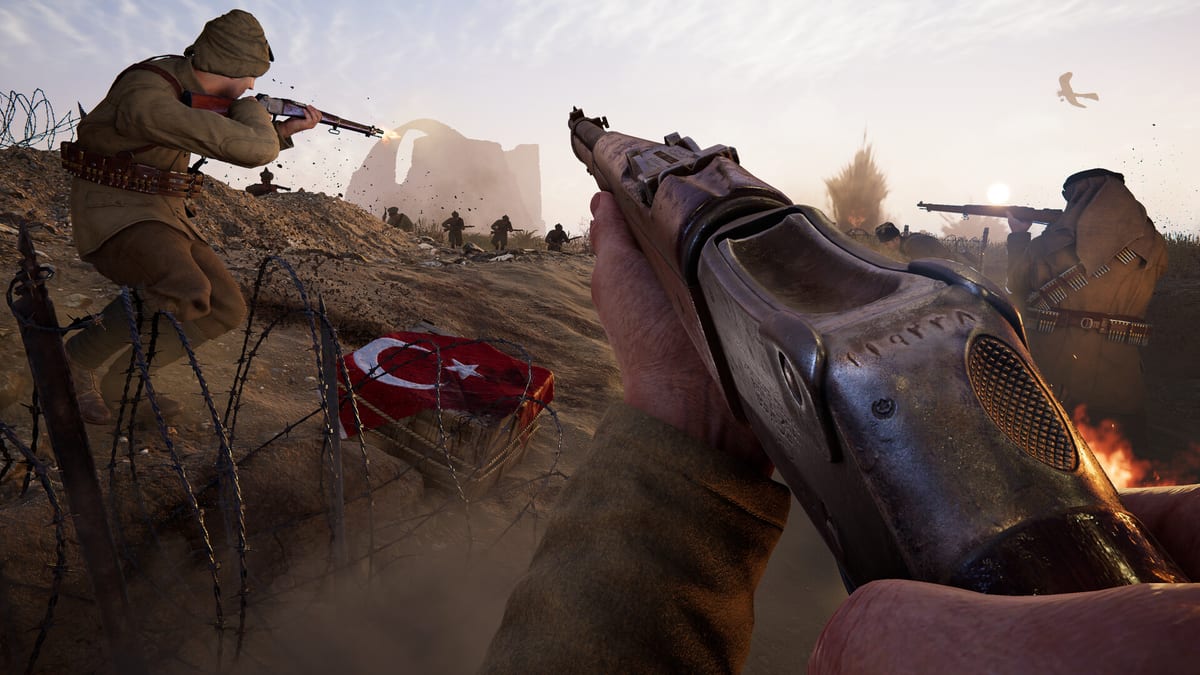
Gallipoli’s map pitch is expeditionary warfare across the Ottoman Fronts, not a single recycled trench skin. BlackMill Games is asking players to land on exposed shores, climb coastal ground under machine-gun fire, and later grind through Mesopotamian town perimeters where palm cover and building interiors change every angle. This overview explains the named theatres already in official materials, how they differ tactically, and which wiki pages to open next. For the hub index, return to the Maps Hub. For launch timing, see the release date page.
The Ottoman Fronts in plain language
After Verdun’s Western Front mud, Tannenberg’s Eastern plains, and Isonzo’s Alps, Gallipoli shifts the series into Middle Eastern campaign spaces. Steam and the official site describe British and Ottoman forces fighting over peninsula landings and desert expeditions. The fantasy is still objective-based 25v25 combat with ten classes and authentic weapons, but the geography changes what “good positioning” means. Long beach approaches punish impatient attackers. Town sieges reward grenades, stretcher work, and ammo runs through short streets. Desert haze and open ground punish anyone who treats every sightline like an Alpine reverse slope.
Official blurbs repeatedly highlight:
- Landings at Anzac Cove aimed at seizing the Dardanelles approach
- Pressure at Cape Helles / V Beach using the SS River Clyde, with Seddulbahir as an Ottoman bastion reference
- Urban and siege fighting at Kut Al Amara in Lower Mesopotamia
- Landmark combat language around places such as the Arch of Ctesiphon
- The moonlit canal of Suez, named as the fifth launch theatre in BlackMill’s day-one press
This wiki deep-dives Anzac Cove, Cape Helles & V Beach, Ctesiphon, Kut Al Amara, and Suez. Do not assume every peninsula fight is the same beach—River Clyde exits and Seddulbahir fortress watches are a different lesson from Anzac ravines, and the moonlit canal is a different lesson again.
How maps meet the mode fantasy
Preview coverage of the Expedition-style attacker/defender flow describes sector pressure, limited attacker tickets, and objectives that may require a secure step beyond simply standing in a circle. GamingTrend’s hands-on also noted that taking a secondary objective can matter for spawns and denying defender tools even when only the HQ is mandatory to advance. Those rules make map literacy practical: knowing which building is the HQ, which nest watches the beach exit, and which alley is the revive lane is more valuable than memorizing a kill count.
When you study any Gallipoli map, ask:
- Where do attackers first become visible?
- Which roofs or ridges give Heavy Machine Gunner value?
- Where can a Stretcher Bearer drag someone without crossing open sand?
- Which objective is mandatory versus strategically useful?
- How does the next sector change elevation or cover type?
Then connect those answers to what’s new versus Isonzo so squad role limits do not strand your team without a medic or ammo runner on a long push.
Anzac Cove at a glance
Anzac Cove is the landing identity piece. Official materials frame Australian and New Zealand soldiers of the British Empire coming ashore in the early campaign window, then fighting inland over punishing coastal ground. Expect the map conversation to center on beach exits, ravines, and the chaos of the first foothold. Read the full Anzac Cove page if you want landing-specific habits rather than generic “play cover” advice.
Cape Helles & V Beach at a glance
Cape Helles is the southern contrast: V Beach pressure, the grounded SS River Clyde, and Ottoman defense around Seddulbahir. Open sand and fortress sightlines punish impatient attackers even harder than a crooked ravine. Read the dedicated Cape Helles page before you treat every landing as Anzac Cove with a new skybox.
Ctesiphon at a glance
Ctesiphon is the open Mesopotamian ruins map: three Expedition sectors, the Arch of Ctesiphon as a funnel, the Gurkha Mound as a high watch, and a final Headquarters split by a Tigris offshoot. It is the desert counterweight to the peninsula beaches. Read the dedicated Ctesiphon page and watch the official Introducing Ctesiphon trailer there before you treat every Ottoman Front fight like Anzac Cove.
Kut Al Amara at a glance
Kut Al Amara is the siege-town counterweight. After Ctesiphon pressure in the historical campaign framing, Ottoman forces push British troops back into Kut and attack the defenses. In game terms, that points to denser interiors, shorter sightlines, and trailer imagery of dashes through palms toward town edges. The Kut Al Amara page embeds the Siege of Kut announcement trailer so you can see the space BlackMill is selling.
Suez at a glance
Suez is the fifth launch map: a moonlit canal rather than a dawn beach. Water is a linear obstacle, crossings are chokepoints, and low light makes Spotters and HMGs earn their keep. Read the dedicated Suez page before you treat every Ottoman Front night fight like Anzac Cove with the lights dimmed.
Studying maps with the rest of the wiki
Maps are only half the prep. Class roles live under Players, early ranking talk under Tier List, and onboarding under Getting Started. If your PC is the question mark, stop guessing and open system requirements. If you want a reality check from Gamescom and PAX sessions, use the preview review page and remember it is not a launch score.
Also keep the Guides Hub and Updates Hub nearby. Trailers often drop with a single map name; this overview is the index that should absorb those names without turning the front page into a dump of unrelated links.
Authenticity and fieldwork context
Coverage of the peninsula work has described collaboration with Gallipoli historical-site authorities and the use of LiDAR and other technical survey data for locations tied to the Çanakkale battles. That supports BlackMill’s “rebuilt battlefield” marketing for places such as Anzac Cove and Seddulbahir, but this wiki will not invent meter-perfect claims about every rock. We stick to developer-named spaces and clearly labeled preview observations.
Live practice plan
- Read this overview once.
- Deep-read Anzac Cove, Cape Helles, Ctesiphon, Kut Al Amara, and Suez.
- Skim what’s new for squad and support changes.
- Pick two classes on Players that fit beach and town spaces.
- After launch, run bots & practice drills, then rewrite your personal callouts.
Gallipoli is live as of August 20, 2026. Prefer official names over datamined fantasies, and treat first-week layout callouts as still settling.
Frequently Asked Questions
Quick answers to the most common questions.
What maps does Gallipoli include?
Official launch press names five theatres: Anzac Cove, V Beach / Cape Helles, Ctesiphon, Kut Al Amara, and the moonlit Suez canal. This wiki has a dedicated page for each.
Is Gallipoli only set on the Gallipoli peninsula?
No. The game is framed around Ottoman Fronts warfare, including Mesopotamian fighting such as Kut Al Amara.
Which map page should I read first?
Stay on this overview, then open Anzac Cove for landings and Kut Al Amara for siege-town combat.
How do maps connect to classes?
Beach sightlines and town interiors favor different roles. Use the Players Hub and what's new versus Isonzo after you learn the terrain.